
Dual Harvest SIP Calculator
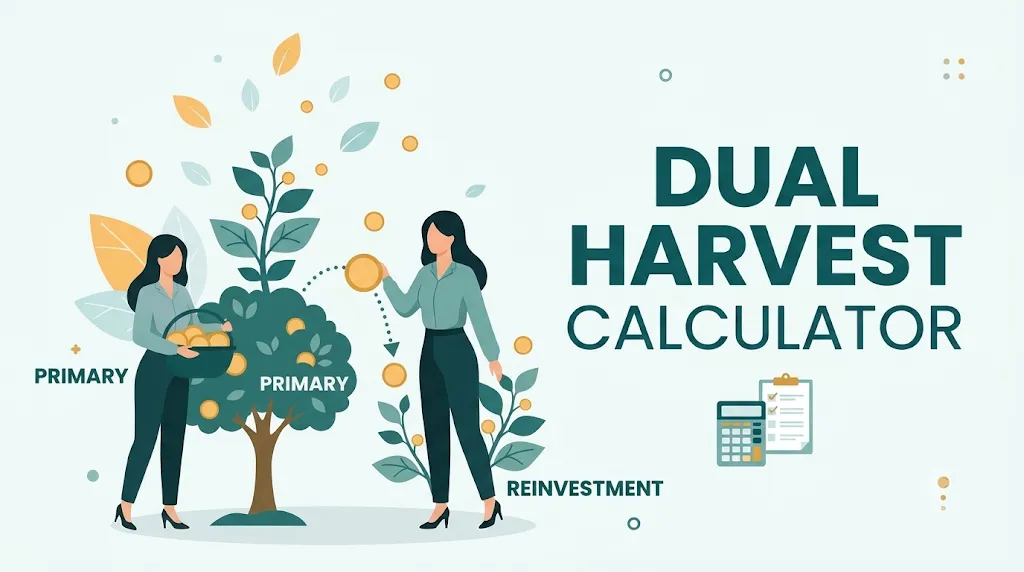
Use this free Dual Harvest SIP calculator to see what happens when you run a SIP in equity and, every so often, harvest part of the profit into a debt fund and into cash. Enter your SIP, the returns you assume and the harvesting rules, and compare the result with a plain SIP that is never harvested, in a market that includes falls.
How this Dual Harvest SIP calculator works
You invest a fixed amount every month in an equity fund. At each harvest date (every year, or every six months), the calculator works out your profit, which is the equity value less the amount still invested in it. If the profit is at least the minimum you set, a chosen share of it is sold. Part of that harvest goes to a debt fund, which keeps earning the debt return, and the rest is paid out as cash. The remaining equity keeps compounding and keeps receiving the SIP. For example, ₹10,000 a month for 15 years, harvesting half of any profit above 15% of the amount invested every year, with half of each harvest going to debt and half paid out as cash, gives about ₹8.0 lakh in cash, ₹11.5 lakh in the debt fund and ₹12.3 lakh in equity, a total of about ₹31.8 lakh. This assumes 12% on equity, 7% on debt, and market falls of 25% starting after year 4 and repeating every 6 years. The result is an illustration, not a forecast.
How to read the result
The same money goes into a plain SIP that is never harvested, and the two are compared. In this example the plain SIP ends higher, at about ₹37.8 lakh, because harvesting moves money from a higher-return asset into lower-return ones. What the strategy gives in return is cash in hand along the way and smaller swings: its total value fell by at most about 12.3% in the market falls, against 22.5% for the plain SIP. Whether that trade suits a client depends on whether they value the cash and the steadier path more than the extra growth.
The market the strategy runs through
A strategy like this only becomes interesting when markets rise and fall, so the calculator runs both investors through a market with falls that you control. Set the size of each fall to 0% to see a steady market, where the plain SIP does best. Try bigger falls and shorter gaps between them to see how the picture changes.
What this calculator does not include
Taxes and exit loads on the units sold at each harvest are not included, and they can be significant, because every harvest is a sale. The cash paid out is counted in total wealth but is assumed to earn nothing. Real markets are less regular than the falls and recoveries shown, and the result depends on the rules and returns you enter. This is a way of exploring how a strategy behaves. It is not a promise that it will do better, and it is not a recommendation.
अक्सर पूछे जाने वाले सवाल (FAQs)
What is a Dual Harvest SIP?
It is a SIP in equity where, at regular dates, part of the profit is harvested into two places: a debt fund, which keeps the harvested profit growing at lower risk, and cash, which can fund payouts or expenses.
Does harvesting make me more money?
Not necessarily. In steady or rising markets a plain SIP usually ends higher, because the harvested money earns less than equity. The strategy trades some growth for cash in hand and a smaller fall in total value, and the calculator shows both sides.
What minimum profit and share should I use?
The starting values (a 15% minimum profit, half of the profit harvested, split evenly between debt and cash) are only illustrations. Try other values to see how they change the result. We can help you choose rules that suit your goals.
How is this different from Harvest and Preserve?
Dual Harvest takes profits out on a fixed schedule and pays part of them out as cash. Our Harvest and Preserve SIP calculator moves profits into a safer fund when they cross a trigger, and keeps them there. To see what a fall does to a plain SIP, try our Market Crash Simulator.
Is the return shown guaranteed?
No. Mutual fund returns are market-linked and can be higher or lower than the rates you enter. Mutual fund investments are subject to market risks. Read all scheme related documents carefully. Learn more on the AMFI investor awareness site.
Is my information saved?
The calculations run in your browser. The figures you enter are not sent to us or stored unless you choose to send them, for example by using the WhatsApp button.